

گزارش صبحگاهی (morning report) از سنتهای قدیمی در آموزش پزشکی بوده و در طی آن، اطلاعات یک بیمار که اخیراً در بیمارستان بستری شده، توسط فراگیران به اعضای هیئت علمی و دیگر فراگیران ارائه شده و راجع به آن بیمار بحث میشود.
به سراغ یک بیمار از برنامهٔ خواندن گزارشهای صبحگاهی مجلهٔ نیوانگلند برویم.
ما در این مجموعه، اطلاعات اصلی بیمار را ترجمه نمیکنیم که تمرینی هم باشد برای خواندن به زبان انگلیسی. البته اگر کلمهٔ دشواری در اطلاعات بیمار داشته باشد، توضیحش خواهیم داد.
Reason for presentation: itching and shortness of breath
Part 1: The Patient’s Story History of Present Illness:
A 67-year-old man with metastatic tonsillar squamous cell carcinoma, cardiomyopathy, and chronic obstructive pulmonary disease (COPD) presented to the emergency department with itching on his back and shortness of breath. He came to the oncology clinic earlier that day to receive a chemotherapy infusion. A few minutes into the treatment, his back started to itch, and the infusion was stopped. Shortly afterward, he started feeling short of breath. The shortness of breath progressively worsened, prompting transfer to the emergency department. Before coming to the clinic, the patient had felt well, with no fevers, chills, rashes, flushing, chest pain, wheezing, dyspnea, or abdominal pain.
در مورد کلمات دشوار متن فوق و باکس زیر
کلمه prompt چندین معنی دارد که در اینجا به عنوان فعل به معنای موجب شدن و واداشتن است.
در باکس زیر، کلمهٔ carpenter به معنای نجار است.
فعل abstain وجود دارد که به معنای پرهیز کردن است و معمولاً برای یک عادت، فعالیت، غذای ناسالم، الکل و موارد مشابه به کار میرود.
همچنین وینیارد جزیرهای در نزدیکی ایالت ماساچوست است.
بقیهٔ اطلاعات در مورد شرح حال را میتوانید در باکس زیر ببینید:
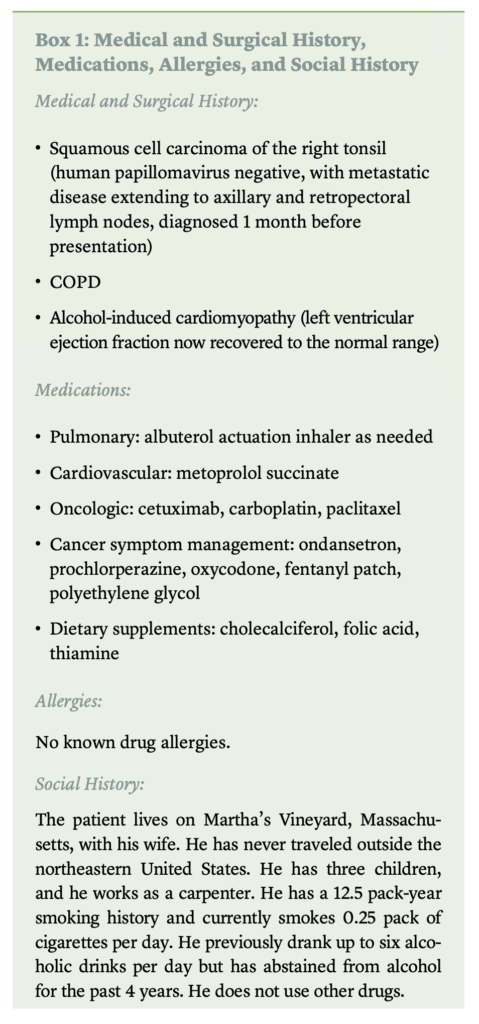
دقت کنید همینجا دو نکتهٔ ظریف برای یادگیری نیز وجود دارد. نخست ارتباط HPV با سرطانهای SCC است و دومی بهتر شدن عملکرد قلب پس از ترک الکل در کسی که کاردیومیوپاتی الکلی دارد.
اگر شما پزشک این فرد بودید، چه سؤالهای دیگری را در شرح حال میپرسیدید و در معاینه به دنبال چه چیزی میگشتید؟
برای دیدن ادامهٔ کیس که به زودی گذاشته میشود، نیاز هست پاسخ خود را ثبت کرده باشید. همچنین تا زمان ثبت پاسخ خود، نمیتوانید پاسخ دوستانتان را مشاهده کنید.
سؤالهایی برای بازنمایی مسئله و تشخیص افتراقی نوشتن
Q1: Does the patient have any active symptoms or has he had recent exacerbations of his COPD or cardiomyopathy?
Rationale for question: This question helps evaluate whether sequelae or exacerbations of the patient’s chronic conditions could be contributing to his current respiratory symptoms.
When evaluating for poorly controlled COPD, it is important to consider frequency of albuterol inhaler use, daytime wheezing or dyspnea, and nocturnal awakenings or symptoms.
When evaluating for heart failure symptoms, orthopnea, paroxysmal nocturnal dyspnea, and lower extremity edema should be queried.
Answer: At baseline, the patient has dyspnea with exertion when walking short distances but does not use supplemental oxygen. Before this presentation, he had not used his albuterol inhaler and did not have any wheezing, nocturnal dyspnea, or lower extremity swelling.
در مورد تفاوت سالبوتامول و آلبوترول
سالبوتامول و آلبوترول یک دارو هستند. سالبوتامول نام غیراختصاصی بینالمللی (international nonproprietary name) دارو است و آلبوترول نام غیراختصاصی رایج در آمریکا (United States Adopted Names).
در ایران نام سالبوتامول رایج است.
در مورد کلمات دشوار متن فوق
فعل query به معنای پرس و جو کردن است؛ معمولاً وقتی که میخواهیم ببینیم موردی صحت دارد یا خیر.
Q2: Does the patient have any new or recent exposures?
Rationale for question: Acute onset of pruritus and dyspnea raises concern for a possible allergic reaction. New exposures, including to foods, medications (including any over-the-counter drugs), insect stings, and substances such as latex, should be queried.
Co-factors that are associated with more severe allergic reactions, such as physical exercise, alcohol, infections, menstrual status/premenstrual status, extreme heat or cold exposure, pollen exposure (in sensitized patients), and use of certain medications (e.g., nonsteroidal anti-inflammatory drugs, opioids, beta-blockers), are important to evaluate.
Answer: Since his cancer diagnosis 1 month ago, the patient has been receiving treatment with new medications to help manage pain and nausea. He came to the clinic for his first dose of cetuximab, and 30 minutes before the infusion, received ondansetron, diphenhydramine, dexamethasone, and famotidine as premedications. He had received approximately 10% of the total dose of cetuximab when the symptoms started.
Regarding co-factors, the patient receives treatment with metoprolol for cardiomyopathy, but the regimen has not changed in many years. He has not noticed any insect stings, or had new food exposures, recent exercise, recent illness, extreme heat or cold exposure, and has not used alcohol, opioids, or nonsteroidal anti-inflammatory medications. He has no history of allergic rhinitis or conjunctivitis.
Q3: Does the patient have any history of allergic reactions or anaphylaxis?
Rationale for question: Although the patient has no known drug allergies, a broader assessment of allergies to include nonmedication allergies or history of anaphylaxis may be useful. For example, disorders related to mast cell activation, such as systemic mastocytosis, mast cell activation syndromes, or idiopathic anaphylaxis, can be associated with a history of allergic reactions or anaphylaxis. Some allergic disorders may be associated with specific allergic reactions. For example, mastocytosis is a risk factor for Hymenoptera venom anaphylaxis.
پردهبالان (Hymenoptera) از بزرگترین راستههای حشرات هستند. در این راسته، زنبورهای وحشی، زنبورها مورچهها و … قرار دارند.
Answer: The patient had previously experienced anaphylaxis after exposure to honeybee venom. At 32 years of age, he developed generalized urticaria and wheezing minutes after a honeybee sting, which was treated with diphenhydramine, methylprednisolone, and intramuscular epinephrine. He was never evaluated by an allergist and was not treated with venom immunotherapy. He does not carry an epinephrine autoinjector.
Physical Examination
Temperature: 37.0 C (oral); heart rate: 108 beats per minute; blood pressure: 120/77 mm Hg; respiratory rate: 30 breaths per minute; and oxygen saturation: 85% breathing ambient air.
The patient appeared pale and in respiratory distress. There was no conjunctivitis, and his face was not flushed. There was no swelling in his tongue or beneath the skin of his lips, face, and extremities. There was urticaria on his lower back.
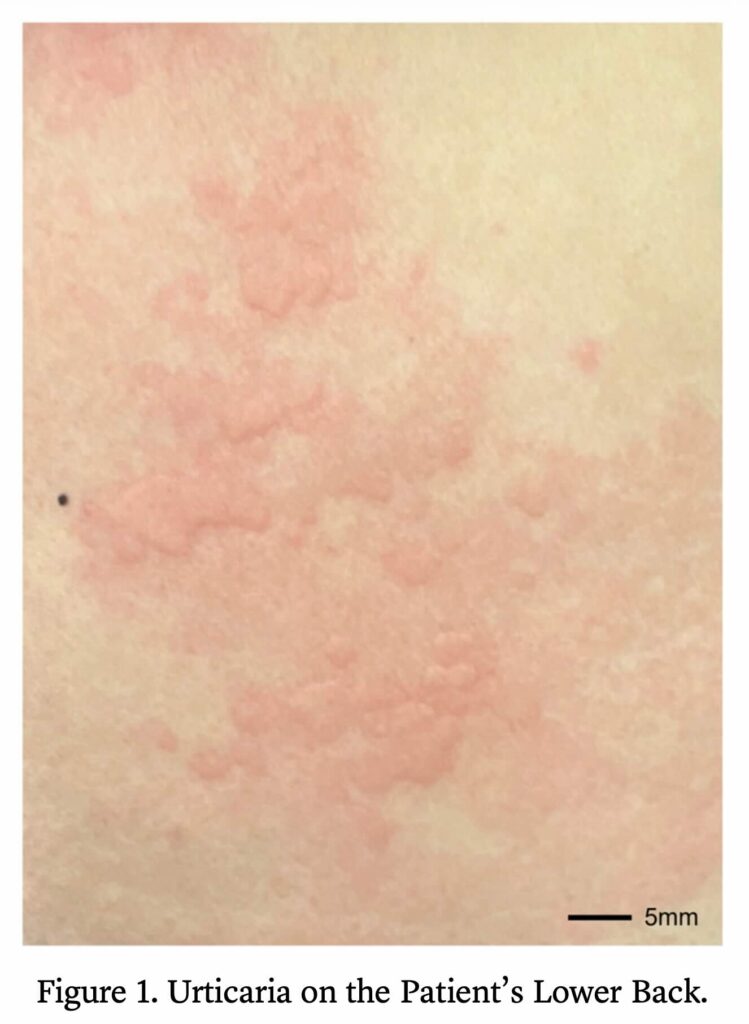
The heart rhythm was regular, and heart sounds were normal, without murmurs or gallops. He was using accessory muscles of ventilation, but there were no adventitious sounds on auscultation. The abdomen was soft and nontender to palpation with normal bowel sounds. The extremities had no rash, clubbing, or edema. There were no cranial nerve abnormalities, and the patient was moving all extremities normally.
تا اینجا، بر اساس اطلاعاتی که دارید سعی کنید مسئله را بازنمایی کنید و سپس یک چارچوب تشخیصی درست کنید.
برای امتیاز دهی به این مطلب، لطفا وارد شوید: برای ورود کلیک کنید




پاسخ خود را در کامنتها بنویسید تا بتوانید پاسخ سایر دوستان را ببینید.